 RankASO
The release-impact view: one version against the last
Read in: 日本語 · 简体中文 · Português · Español · Deutsch
A listing change is judged by putting the seven days of ranks before the version next to the seven days after, for every term and storefront, with the baseline fixed on the day you submitted. Anything less is memory, and memory remembers the terms that went up. RankASO's release-impact view does exactly that from the daily checks already running, marks each term up, down or flat, and shows the field words that explain each move. Here is how to read it, and what to do with each of the three outcomes.
What it shows
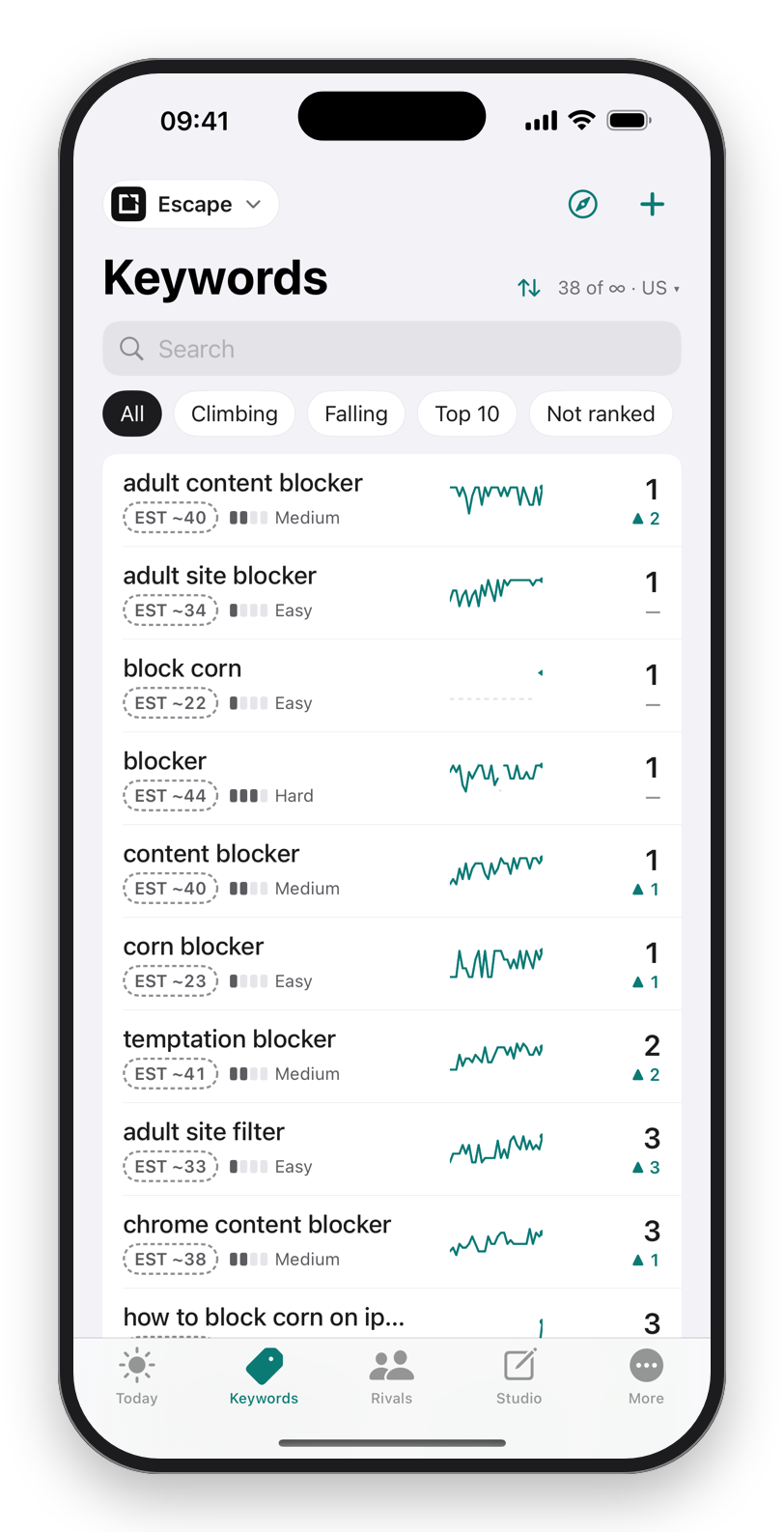
One row per term, per storefront: the average rank over the seven days before the version, the average over the seven days after the settle, and the difference, with the best and worst single days so a one-day spike does not pass for a trend. Beside each row, the words from the field report that the term depends on, so a drop is connected to the word that was removed and a rise to the word that was added. At the top, the version, its date, and what changed in the listing, from the journal entry you wrote on submit day.
When to read it
Fourteen days after the version went live, not before. The store re-indexes a few days after release and the ranks settle for about a week after that. The view labels the days in between as settling and excludes them from the after average. Reading it at day five shows the burst, which is not the result. What the two weeks look like.
The three outcomes
Up. The added words are earning. Keep them, and if a term rose into the teens, set a goal on it; the next word is the one that moves it onto the first screen.
Down. A removed word was carrying the term. The field report in the row says which. Decide whether the terms that rose are worth more than the term that fell; usually they are, because the removal was chosen after reading that word's rank. If not, the word goes back next version.
Flat. The change was not the constraint for that term. The term's top 10 or the name is. Leave the words alone and look at the subtitle next time, or accept that the term is held by apps you cannot displace with a field change.
Our own version
For Escape's November version, the journal entry says what moved in and out of the field and the baseline was recorded on November 3. The review will show whether the three removed words cost the terms they carried, whether the three added words earned the open terms they were aimed at, and whether the number ones held through the change, which they should, because the name carries them. That is the entire evaluation, and it fits on one screen.
The habit it builds
One change per version, a line in the journal, a review at two weeks, a decision per term. After five versions the journal is a record of what this listing responds to, which no tool can sell you and which makes every later change smaller and more certain.
Download on theApp StoreFree to start. No account. Data Not Collected.
Questions
How do I measure the impact of an App Store update on keywords?
Compare the average rank over seven days before the version with seven days after the settle, per term and storefront, from a baseline fixed on submit day. RankASO's release-impact view builds that from the daily checks.
How long after an update should I evaluate keyword rankings?
Fourteen days. The first few days are the old index, the next few are the burst, and the settle takes about a week. The average after the settle is the result.
What if some keywords went up and others went down?
Normal for a field change: the removed words lose their terms and the added words gain theirs. The view shows both; the decision is whether what was gained outweighs what was lost.