 RankASO
Bidding on competitor keywords in Apple Ads: when it pays
Read in: 日本語 · 简体中文 · Português · Español · Deutsch
You cannot put a competitor's name in your App Store listing, but you can bid on it in Apple Ads, and whether that pays depends on one question: does the person who typed that name want that app, or do they want the kind of app it is. A brand with loyal users is a money pit; a brand whose users are shopping is a cheap source of installs, especially when that brand is weak, absent, or gone from the store. Reading which is which takes a minute with the organic data, and that is the step most developers skip.
The rule, and the difference
Store guidelines prohibit other apps' names in your name, subtitle and keyword field. Apple Ads has no such rule: anyone can bid on any term, including a brand name. Many large apps bid on each other. The question is not whether you may; it is whether the taps will convert.
Read the brand term's organic top 10 first
Open the rival's brand name as a term in RankASO and read the top 10. Three things decide the bid.
- Does the brand hold number one with a large lead? Then the searchers wanted it and will scroll past your ad to it. Expensive taps, poor conversion.
- Are there several comparable apps in the top 10? Then the store already treats the term as a category search, and searchers are shopping. Your ad is one more option in a list they are already reading.
- Is the brand absent or gone? A brand that left the store, or that the store no longer ranks first for its own name, leaves its searches to whoever is next. Those searches keep happening for months. This is the one case where a brand term is cheap and converts well, and the removal watch in RankASO is how we see it the day it happens.
When it pays
A rival with a weaker product and visible complaints in its reviews. A rival that has not updated in a year. A rival that has left the store. A rival whose name is also a generic phrase, so that the searcher may not mean the brand at all. In each case, run the brand term in its own ad group with its own small budget and read it separately; mixing it into the main campaign hides whether it works.
When it burns money
A beloved brand with a large lead at number one. A brand bigger than you by an order of magnitude, which bids on its own name and will outbid you. A brand whose users are locked in by data or subscriptions. The taps come, the installs do not, and the main campaign's numbers look worse for it.
The organic version of the same idea
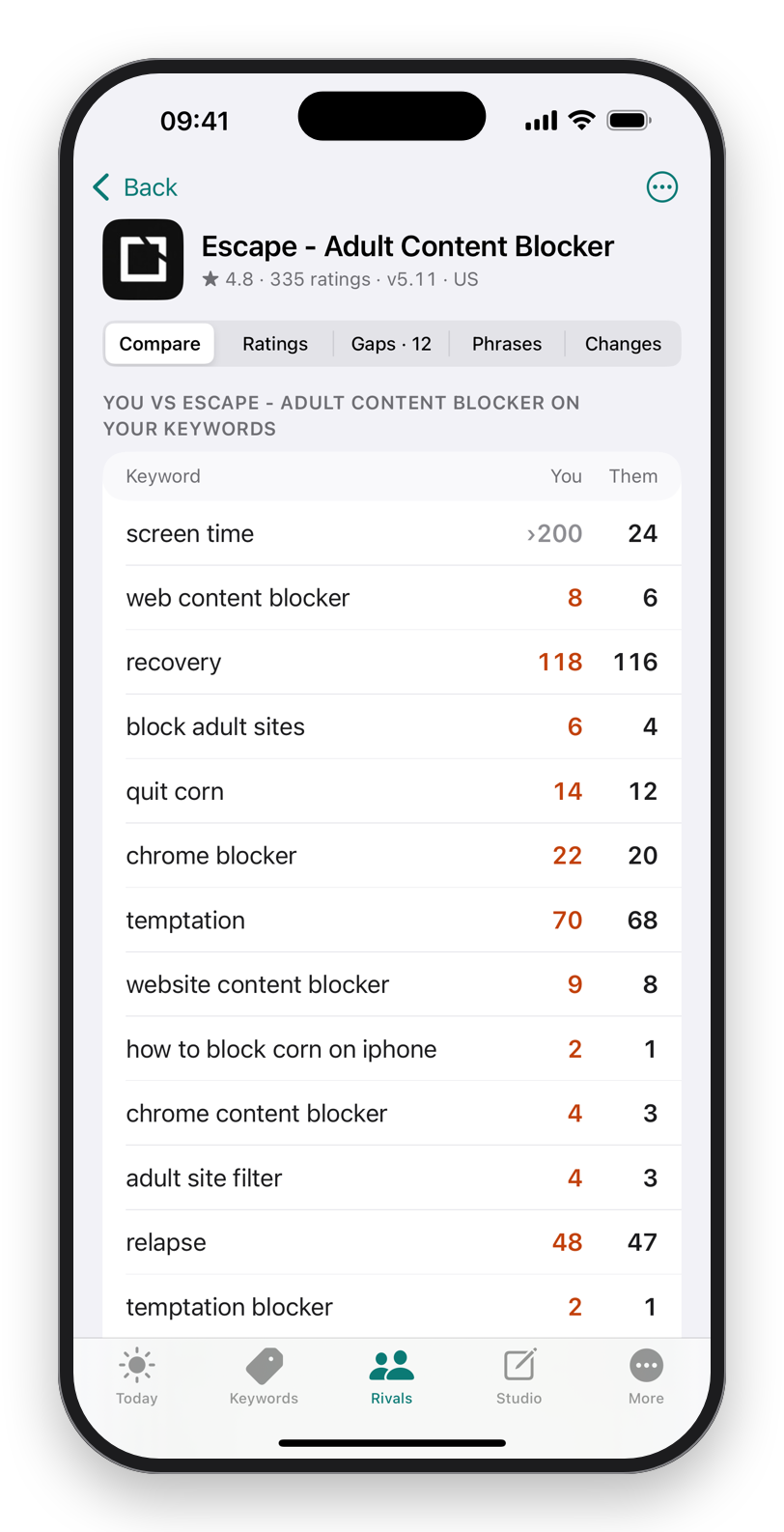
The intent behind a brand search is what the brand's users want: "quit", "recovery", "block", the next words they type when the brand does not satisfy. Those intent phrases can go in your listing, and they are what to track organically. For our own app Escape, that is how a rival's departure in late October turned into tracked terms rather than a brand bid: the removal watch listed the terms the rival had held, and the intent phrases among them went into the keyword field.
Download on theApp StoreFree to start. No account. Data Not Collected.
Questions
Is it allowed to bid on a competitor's name in Apple Ads?
Yes. The store's listing rules prohibit other apps' names in your metadata; Apple Ads has no such restriction. Whether it converts is the real question.
When does bidding on competitor keywords work?
When the brand is weak, absent or gone, or when the store already ranks several comparable apps for the name, so searchers are shopping. Read the brand term's organic top 10 before bidding.
How do I know if a competitor left the App Store?
Track them as a rival. RankASO's removal watch alerts you the day a tracked rival disappears and lists the terms it held, which are the terms whose searches are now open.